

Palaeontologist-led, in-depth natural history experiences
FIELD STUDIES
The Hong Kong Palaeontology Research Centre integrates palaeontology, geology, and natural history education to design local and overseas field study programmes for schools, educational organisations, and youth science programmes.
The Centre’s founding palaeontologist has extensive local and overseas field experience and maintains strong academic links with museums and research institutions worldwide. This allows field-trip sites to be evaluated and selected from a researcher’s perspective for scientific value, educational potential, safety, and logistical feasibility. All field study programmes are education-led and planned according to site conditions, partner organisation arrangements, safety requirements, and seasonal factors.
The Centre aims to allow participants to visit real field sites and experience how scientific expeditions build knowledge through discovery, observation, recording, comparison, and analysis, under professional guidance and safe conditions.
Each study programme can be tailored to participants’ ages, learning objectives, trip length, and seasonal conditions. Programmes typically combine pre-trip lectures, museum visits, field observation, and post-trip project wrap-ups. Participants do more than visit museums and fossil sites: under palaeontologists’ guidance, they come to see how fossils, rocks, palaeoenvironments, and local history together form a coherent natural history narrative.
Below are some of the routes and locations we offer. If schools or organisations wish to visit other sites related to palaeontology, geology, or natural history, the Centre can recommend options based on learning objectives, seasonal conditions, local resources, safety requirements, and logistical feasibility.
Field study programmes are subject to seasonal constraints and the Centre’s and local partner institution's annual fieldwork schedule. Places for each destination are therefore limited each year. Interested schools and organisations are encouraged to contact us early, so there is enough time to plan itineraries, content, and related arrangements.
TARGET AUDIENCE
-
Primary schools, secondary schools, and tertiary institutions
-
Youth science programmes in partnership with organisations or corporations
-
Organisations and corporations
LOCATIONS
-
Sites assessed through the Centre's field visits as suitable for museum and outdoor natural history field programme
FIELD STUDY PROGRAMME INCLUDES
-
Pre-trip orientation and background lecture tailored to the destinations
-
Guided visits to palaeontological museums and specimen collections
-
Guided visits to fossil sites and geological sites
-
Field observation and documentation methods
-
Introduction to local natural history, geological history, and cultural heritage
-
Post-trip project wrap-ups, sharing sessions, or student presentations
EXPEDITION ROUTES


NORTHEAST NEW TERRITORIES, HONG KONG SAR
Duration: 1 day
Best season: January–May & September–December
A local palaeontology and geology field route that visits and observes Hong Kong’s classic palaeontology-related localities by land and sea. In a single day, participants can observe sedimentary rock strata formed between about 400 and 55 million years ago, and gain an overview of key episodes in local natural history.


HEYUAN, GUANGDONG, CHINA
Duration: 1–2 days
Best season: January–May & September–December
Renowned for its abundant dinosaur-egg fossils, Heyuan is a short-haul palaeontological study route well-suited for beginners. Beyond dinosaur eggs, the region has also yielded dinosaur bones, ammonites, and mammal fossils. The field study combines museum visits with outdoor field observation of fossil-bearing rocks, landforms, and the natural environment.


WESTERN LIAONING, CHINA
Duration: 7–10 days
Best Season: April–October
Explore the internationally renowned fossil localities of the Jehol Biota. Visit museums, geoparks, and iconic palaeontological sites to learn about the history of dinosaur research in China, and how feathered dinosaurs, early flowering plants, and other exquisitely preserved fossils have reshaped scientists’ understanding of Mesozoic life.


TURPAN BASIN, XINJIANG, CHINA
Duration: 7–10 days
Best Season: April–October
Explore Northwestern China’s distinctive geological landscapes, dinosaur fossil sites, and Xinjiang’s historical and cultural heritage as a key hub of the Silk Road. Combining palaeontology, geology, and history, this route is well suited to an in-depth, interdisciplinary study programme.


MONGOLIA
Duration: 7–10 days
Best Season: July–September
Visit renowned dinosaur fossil sites and Gobi Desert landscapes. Through palaeontological museums and classic fossil localities, explore the daily life of fieldwork in the desert, the history of international dinosaur research, and the scientific significance of studying dinosaur ecosystems.


SHANGHAI, CHINA
Duration: 4–6 days
Best Season: Year-round
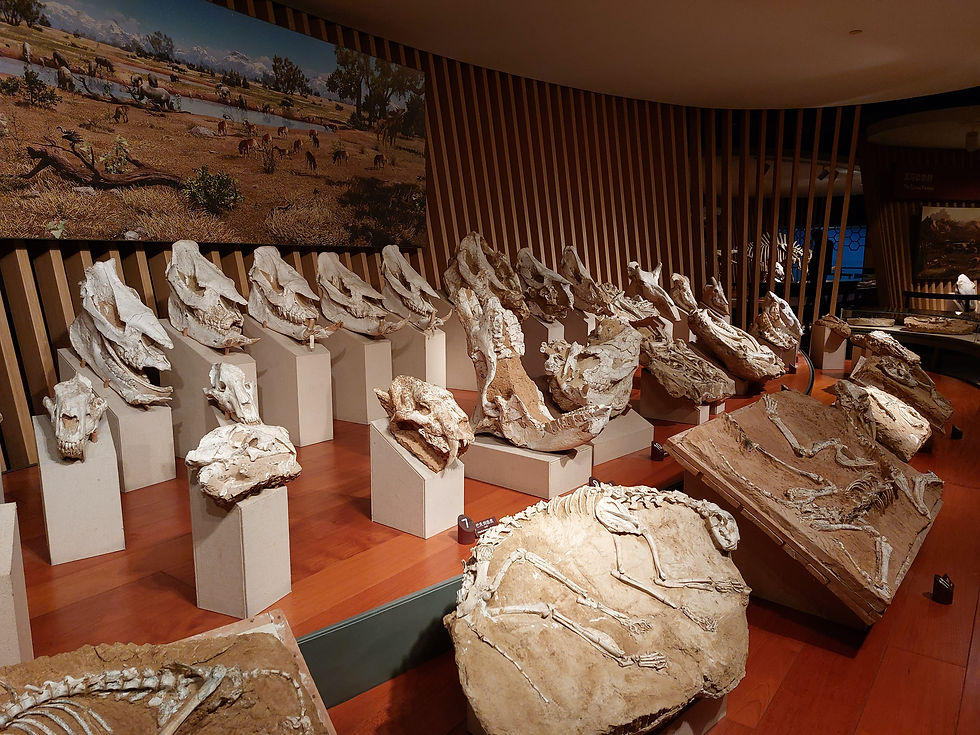
Combining museum visits with exchanges at local university laboratories, this programme is designed for advanced learning in life sciences and natural history. It covers specimen observation, hands-on laboratory work, and discussions with scientists, allowing participants to experience the research process, from experimental design to drawing conclusions, under professional guidance.
